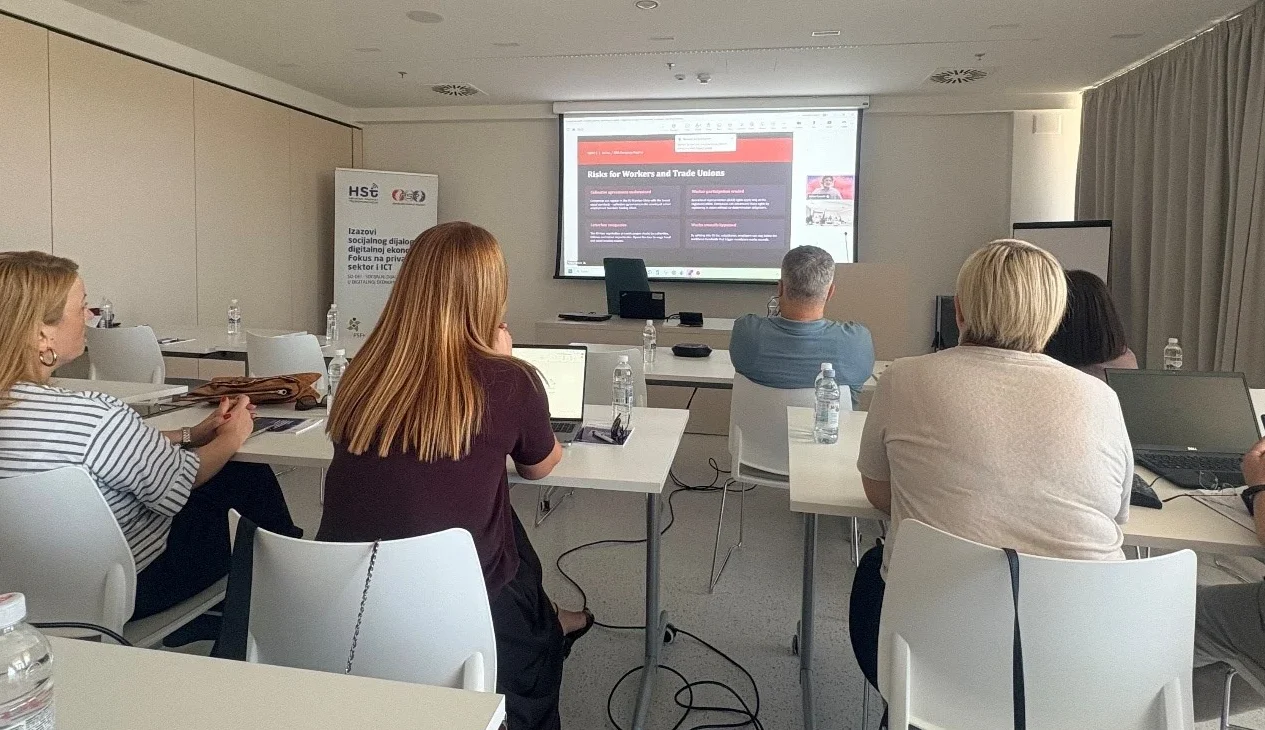
As part of the project "Challenges of social dialogue in the digital economy: focus on the private sector and ICT" in Split on June 11, 2026. was held an educational workshop on the topic Overview of current European policies, trade union victories – inspiration from successful campaigns, and strengthening and growing membership”.
The workshop brought together representatives of UNI Europe, trade unions and workers interested in developing quality jobs and improving social dialogue in the private sector. Participants had the opportunity to learn about current European policies and initiatives shaping the future of work, including the development of the EU Quality Jobs Actexamples of successful trade union campaigns and collective bargaining, and the experiences of trade union organizations from the social services sector and the ICT industry in the Czech Republic.
Special attention was paid to topics that are key to the modern labor market:
- strengthening trade union organizing and increasing membership
- examples of successful trade union initiatives and achievements in European companies
- the impact of artificial intelligence and digitalization on work processes and labor relations
- the importance of involving workers in decision-making processes
- the development of quality jobs through effective social dialogue
Through interactive discussions and exchange of experiences, participants analyzed the challenges faced by workers and unions in conditions of accelerated digitalization and considered options for strengthening the protection of workers' rights and improving working conditions.
It was concluded that social dialogue, with the active participation of workers and their representatives, plays a key role in creating a fairer, more inclusive and more sustainable labor market. The need for timely inclusion of workers in digital transformation processes was particularly emphasized so that technological development contributes to higher quality of work and better employment conditions.
The project is co-financed by the European Union through the ESF+ program.
Foto: RSR