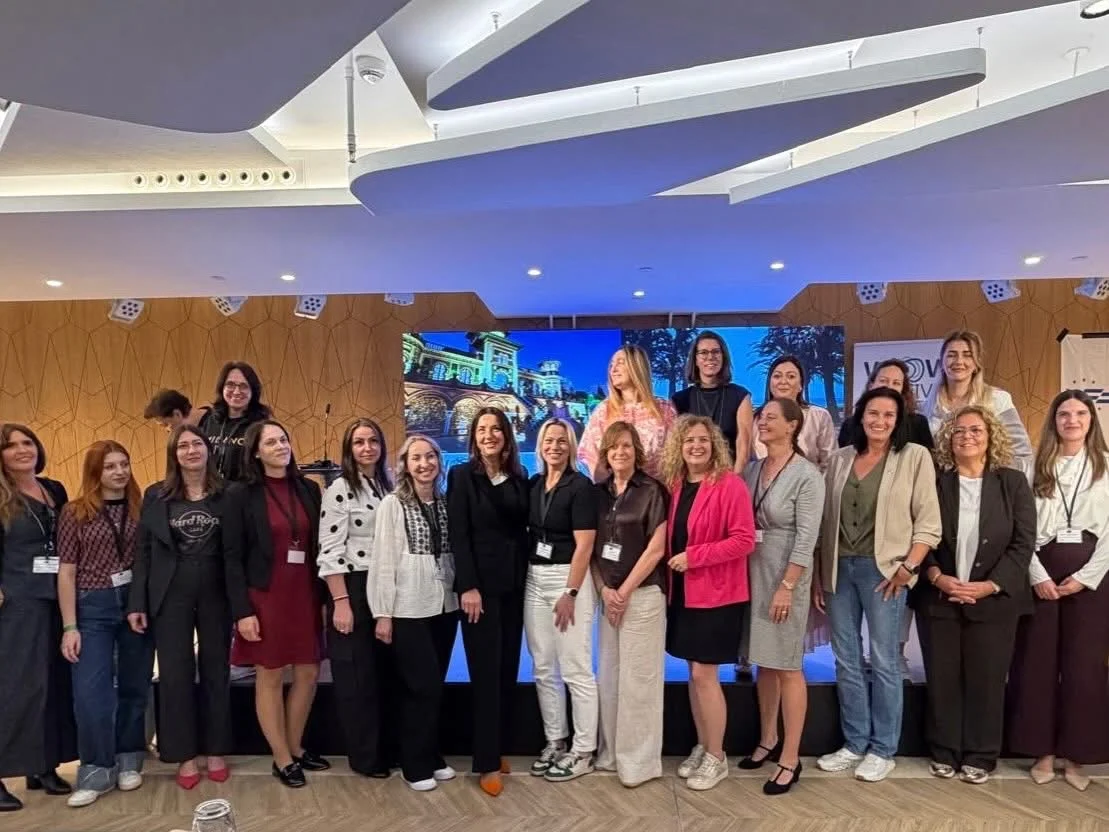
From 20 to 22 October 2026, an international seminar “Paving the Way for Equality: A Roadmap for Women's Rights in the European Labour Market” was held in Torremolinos, Spain. The seminar was organised by the World Organisation of Workers (WOW) and the European Centre for Workers’ Questions (EZA), with financial support from the European Union, and was attended by representatives of the Republic Trade Union of Workers (RSR).
The seminar brought together trade union representatives, experts and other stakeholders in the fields of labour relations and gender equality to exchange experiences and identify concrete solutions for improving women’s position in the labour market. The central theme was how to translate the principles of equality into tangible and measurable changes in the workplace, while simultaneously strengthening social justice, workers’ well-being and Europe’s economic competitiveness.
One of the key topics was the gap between legally guaranteed equality and its implementation in practice. Participants discussed the need to create working environments in which women and men have equal opportunities for employment, professional development and career advancement. Particular emphasis was placed on the importance of men’s active involvement in family responsibilities and a fairer distribution of responsibilities between women and men, both in private and professional life.
Part of the programme focused on the gender pay gap and pay transparency, with particular emphasis on the implementation of Directive (EU) 2023/970 and the role of trade unions in its application. Discussions explored how more transparent pay systems and appropriate protection mechanisms can help reduce inequalities and ensure a fairer valuation of work. It was emphasised that equality is not merely a matter of respecting rights, but also an important factor in economic development, productivity and making better use of the knowledge and skills of all workers.
Particular attention was also given to workers’ well-being, mental workload, and work-life balance. It was highlighted that the unequal distribution of household and family responsibilities can affect women’s career opportunities, professional development and quality of life. In this context, discussions addressed the importance of paternity leave and the need to create working conditions that recognise workers’ needs as whole individuals, rather than merely as employees.
The second part of the seminar focused on concrete mechanisms for achieving equality in the workplace. Participants examined the importance of collective agreements, trade union activities and social dialogue in establishing clear rules and enforceable measures. Examples of good practice from different countries were exchanged, with particular emphasis on successful solutions achieved through collective bargaining and cooperation between the social partners. This reaffirmed that changing workplace culture and raising awareness are important, but insufficient on their own without concrete rules, clear responsibilities and effective implementation mechanisms.
The exchange of international experiences highlighted the importance of ongoing cooperation between trade unions and other relevant stakeholders in finding sustainable solutions to shared challenges.
The participation of RSR representatives in this international seminar represents an important contribution to the exchange of knowledge, the strengthening of international trade union cooperation and the promotion of equal opportunities in the world of work. The experience gained and the examples of good practice presented can serve as an impetus for further activities aimed at reducing gender inequalities, protecting workers’ rights and developing better working conditions in which equality is not merely a declared principle, but an integral part of everyday practice.
Photo: Source WOW